
14th October 2019
The Sustainable Control of Parasites in Sheep (SCOPS) and Control of Cattle Parasites Sustainably (COWS) groups are urging sheep and cattle farmers to monitor for liver fluke this autumn.
Speaking on behalf of SCOPS, Lesley Stubbings says: “Last autumn and winter the levels of fluke were relatively low, but many areas have been wetter this year and early indications are that there will be more liver fluke around this season. Reports to date show there is already some disease in high risk areas and, with experts warning the challenge will be patchy, the need to use testing is greater than ever.”
The provisional NADIS fluke forecast for autun 2019 indicates high risk in Scotland, North West England and North Wales, and moderate risk in Northern Ireland. John Graham Brown of NADIS says: “While the predicted risk may be low in some areas, local conditions are very important. Farms in these regions that have consistently wet, boggy grazing, must assess their risk carefully in the coming months. Autumn fluke risk is also dependent on eggs being present on the pasture, so areas that were grazed by infected cattle or sheep earlier in the season should be considered a risk.”
Speaking on behalf of COWS, Diana Williams of Liverpool University says: “Farmers now have some very useful testing tools available to them, including a blood test. At this early stage in the season, blood testing this year’s lambs gives us the earliest indication of a challenge, because it only takes about four weeks after infection for antibodies to be present. If they test positive, we know liver fluke are present and treatment is indicated, because they can only have been infected this summer/autumn.
“Taking action will avoid losses due to fluke in high risk situations, but remember that testing can also avoid unneces sary treatments If animals are not infected with liver fluke. This saves money and time and helps us protect the few medicines we have available to combat this parasite.”
Updates from around the UK
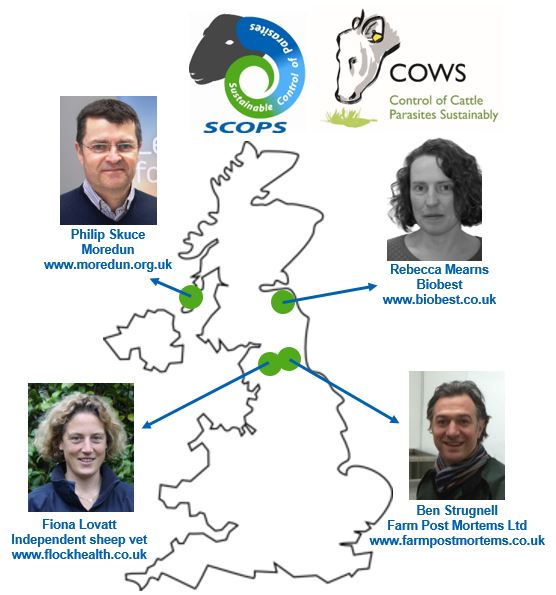 Rebecca Mearns of Biobest Laboratories: “We have only had a few positive coproantigen ELISA tests so far this season, but this may be because it is quite early in the season and the flukes in the animals are still too immature. It is really important to consider re-testing in four to six weeks if this is the case. In contrast, the blood test has shown some high positives in parts of Wales from as early as the end of July. In dairy cattle we’ve also seen some high antibody levels in bulk milk samples in some herds and, with housing for cattle now starting, it is important to seek advice on appropriate treatment. Where results have been negative, it is important these flocks consider repeating the screening and monitor abattoir feedback to determine the need to treat. It’s always worth considering liver fluke as a cause of poor performance, especially when other causes have been ruled out, and we can run the test on the same samples used for trace element testing so this saves getting the vet out twice.”
Watch out for regular updates from SCOPS and COWS as the autumn and winter progresses – and find more at www.scops.org.uk and www.cattleparasites.org.uk.
Notes to editors: -

